Europe is running dry

How the continent is becoming part of the global geography of drought
FreedomLab
July 6, 2026

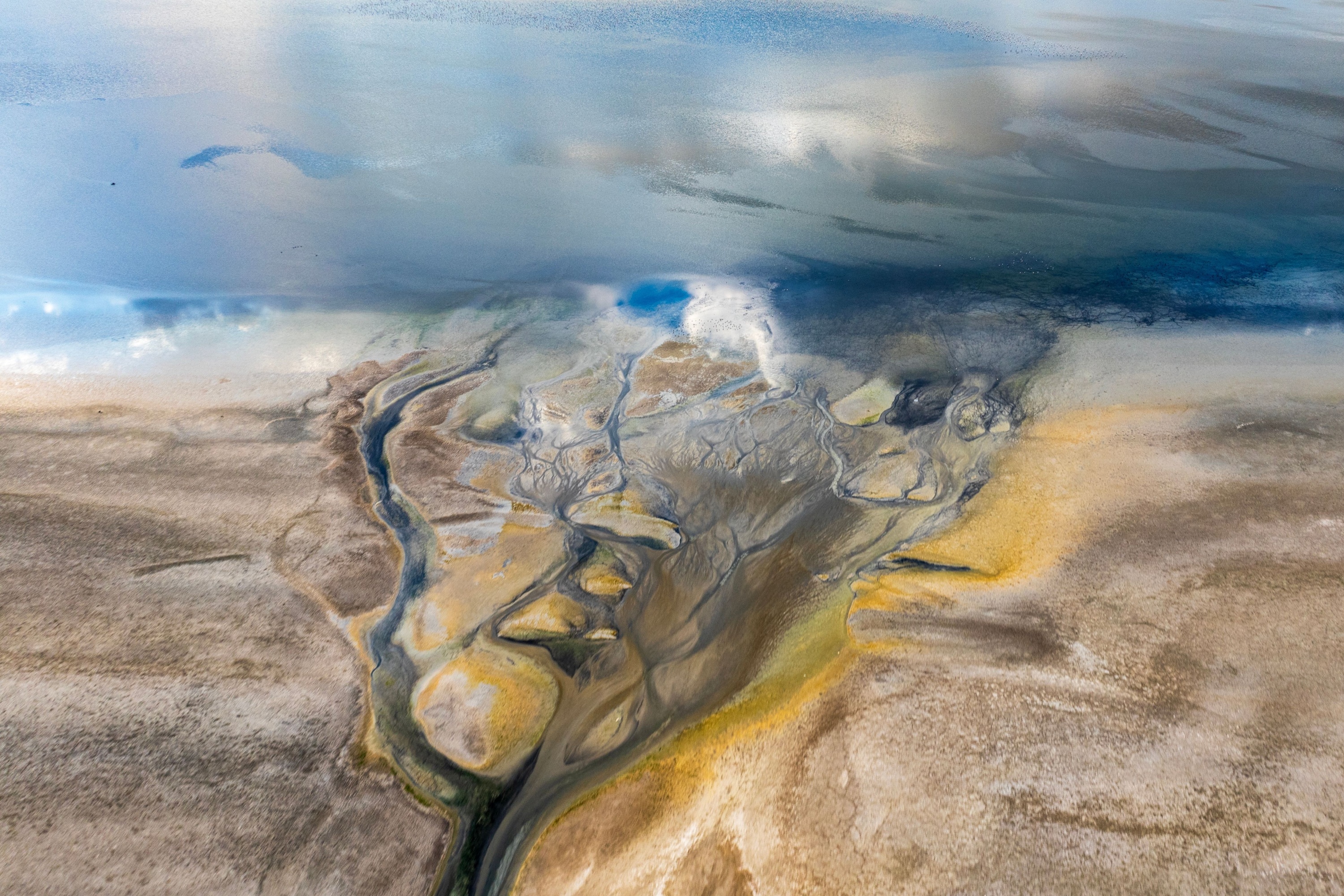
Summer is barely underway, and Europe has already faced an exceptional heatwave. According to the World Meteorological Organization (WMO), in the second part of June temperatures across large parts of Western, Central and Southern Europe were between 3°C and 10°C above the seasonal average, driven by a rare combination of a rapidly developing El Niño, a strong positive Indian Ocean Dipole and persistent marine heatwaves in the Mediterranean and Norwegian Seas. At the same time, the European Drought Observatory reports widespread drought conditions across the continent, with the most severe impacts in Eastern Europe and persistent rainfall deficits stretching from France to the Iberian Peninsula. Because today’s exceptions are tomorrow’s norms, prolonged heat and drought will have far-reaching consequences for the continent.

No safe haven (anymore)

That drought carries significant economic costs comes as no surprise. However, for much of the past century, Europeans associated the economic consequences of prolonged drought with other continents. California, Australia, Southern Africa and parts of South America regularly experienced water shortages, failed harvests and economic disruption, often amplified by El Niño. Europe, by contrast, largely benefited from a relatively stable temperate climate. More or less we only suffered the second-order effects from elsewhere. Heatwaves occurred and harvests failed here as well, of course, but they rarely altered the continent's broader economic trajectory. That exceptional position is rapidly disappearing. The three warmest years on record have all occurred within the last few years, with 2024 becoming the hottest year ever measured globally, while consecutive summers have exposed growing vulnerabilities in European agriculture, industry and infrastructure. Europe is increasingly becoming part of the same global geography of drought that has long characterised other regions.

The economic effects are already measurable. Climate Analytics estimates that the combined impact of heat and drought is reducing average household incomes across Europe by nearly 3 percent, rising to almost 10 percent in the hardest-hit regions. Meanwhile, research by the ECB and the University of Mannheim projects that the economic fallout from the 2025 drought could exceed €43 billion once disruptions to supply chains and industrial production are taken into account. Climate adaptation is therefore no longer simply about protecting ecosystems or reducing emissions. As Europe becomes increasingly water-constrained, drought is emerging as an economic, geopolitical and even cultural challenge.

From ideal to imperative

This shift fundamentally changes the rationale behind climate adaptation. Investments in drought-resistant crops, AI-assisted irrigation, healthier soils, local water storage and smarter water management are no longer justified primarily by environmental goals or sustainability targets. They are increasingly valued for their ability to reduce inflation, prevent productivity losses, secure food production and protect supply chains. As we have written before, this is part of a much broader shift. Much like the energy transition before it, climate adaptation is slowly being untangled from environmental ideals and now aligning more with economic and strategic imperatives. Recent OECD research estimates that every dollar invested in drought resilience generates between two and three dollars in economic returns, rising to as much as ten dollars in the most vulnerable regions. Climate adaptation might therefore become part of Europe's economic infrastructure rather than its environmental agenda. Just as energy security returned to the centre of European policymaking after the energy crisis, water security may become Europe's next strategic investment cycle. At the same time, Europe's historical exceptionality may also be its greatest vulnerability. Having long been spared the structural impacts of drought, the question is whether it is sufficiently prepared to adapt to this new strategic imperative in a more fundamental way then a mitigation of the worst effects.

The implications extend beyond economics. Once again, the energy crisis offers an instructive analogy. Just as energy emerged as a strategic geopolitical resource, reshaping debates over sovereignty and sustainability, water may increasingly come to occupy the same position. For countries along the Nile, water has long been a source of geopolitical power, with dams, reservoirs and river flows shaping regional politics for decades. For Europe, by contrast, this is relatively unfamiliar territory.

Countries with relatively stable freshwater supplies, cooler climates or resilient agricultural production may acquire new strategic advantages within Europe, while water scarcity increasingly shapes decisions about food production, industrial investment, energy generation and critical infrastructure. Rivers, reservoirs and water systems may become as politically significant as pipelines and electricity grids have been over the past decades. As other parts of the world face similar pressures, Europe is also likely to view drought less as a domestic environmental challenge and more as a question of strategic autonomy, resilience and security.

A shifting Mediterranean

The transformation may ultimately become visible in everyday life as well. Europe's cultural geography has long revolved around the Mediterranean summer, yet prolonged heat is already beginning to show first signs in change patterns of tourism, work and urban life. Holiday seasons are shifting towards spring and autumn, Northern Europe is emerging as an attractive destination for so-called ‘coolcations’, while southern cities increasingly adapt through night-time economies and redesigned public spaces. Over time, drought thus may reshape not only where Europeans produce and invest, but also where they travel, how they work and how they experience the seasons.

To wrap up, Europe's drought is therefore much more than another climate story. It signals a broader transition in which water increasingly becomes a determining factor for economic prosperity, geopolitical influence and cultural life. Climate adaptation is no longer solely an environmental imperative; it is becoming an economic strategy to safeguard productivity and competitiveness, a geopolitical strategy to secure critical resources, and a cultural strategy for adapting European societies to a fundamentally different climate.


Series 'AI Metaphors'

×
1. The tool
Category: The object
Humans shape tools. We make them part of our body while we melt their essence with our intentions. They require some finesse to use but they never fool us or trick us. Humans use tools, tools never use humans. We are the masters determining their course, integrating them gracefully into the minutiae of our everyday lives. Immovable and unyielding, they remain reliant on our guidance, devoid of desire and intent, they remain exactly where we leave them, their functionality unchanging over time. We retain the ultimate authority, able to discard them at will or, in today's context, simply power them down. Though they may occasionally foster irritation, largely they stand steadfast, loyal allies in our daily toils. Thus we place our faith in tools, acknowledging that they are mere reflections of our own capabilities. In them, there is no entity to venerate or fault but ourselves, for they are but inert extensions of our own being, inanimate and steadfast, awaiting our command. (This paragraph was co-authored by a human.)
Read the article
×
2. The machine
Category: The object
Unlike a mere tool, the machine does not need the guidance of our hand, operating autonomously through its intricate network of gears and wheels. It achieves feats of motion that surpass the wildest human imaginations, harboring a power reminiscent of a cavalry of horses. Though it demands maintenance to replace broken parts and fix malfunctions, it mostly acts independently, allowing us to retreat and become mere observers to its diligent performance. We interact with it through buttons and handles, guiding its operations with minor adjustments and feedback as it works tirelessly. Embodying relentless purpose, laboring in a cycle of infinite repetition, the machine is a testament to human ingenuity manifested in metal and motion. (This paragraph was co-authored by a human.)
Read the article
×
3. The robot
Category: The object
There it stands, propelled by artificial limbs, boasting a torso, a pair of arms, and a lustrous metallic head. It approaches with a deliberate pace, the LED bulbs that mimic eyes fixating on me, inquiring gently if there lies any task within its capacity that it may undertake on my behalf. Whether to rid my living space of dust or to fetch me a chilled beverage, this never complaining attendant stands ready, devoid of grievances and ever-willing to assist. Its presence offers a reservoir of possibilities; a font of information to quell my curiosities, a silent companion in moments of solitude, embodying a spectrum of roles — confidant, servant, companion, and perhaps even a paramour. The modern robot, it seems, transcends categorizations, embracing a myriad of identities in its service to the contemporary individual. (This paragraph was co-authored by a human.)
Read the article
×
4. Intelligence
Category: The object
We sit together in a quiet interrogation room. My questions, varied and abundant, flow ceaselessly, weaving from abstract math problems to concrete realities of daily life, a labyrinthine inquiry designed to outsmart the ‘thing’ before me. Yet, with each probe, it responds with humanlike insight, echoing empathy and kindred spirit in its words. As the dialogue deepens, my approach softens, reverence replacing casual engagement as I ponder the appropriate pronoun for this ‘entity’ that seems to transcend its mechanical origin. It is then, in this delicate interplay of exchanging words, that an unprecedented connection takes root that stirs an intense doubt on my side, am I truly having a dia-logos? Do I encounter intelligence in front of me? (This paragraph was co-authored by a human.)
Read the article
×
5. The medium
Category: The object
When we cross a landscape by train and look outside, our gaze involuntarily sweeps across the scenery, unable to anchor on any fixed point. Our expression looks dull, and we might appear glassy-eyed, as if our eyes have lost their function. Time passes by. Then our attention diverts to the mobile in hand, and suddenly our eyes light up, energized by the visual cues of short videos, while our thumbs navigate us through the stream of content. The daze transforms, bringing a heady rush of excitement with every swipe, pulling us from a state of meditative trance to a state of eager consumption. But this flow is pierced by the sudden ring of a call, snapping us again to a different kind of focus. We plug in our earbuds, intermittently shutting our eyes, as we withdraw further from the immediate physical space, venturing into a digital auditory world. Moments pass in immersed conversation before we resurface, hanging up and rediscovering the room we've left behind. In this cycle of transitory focus, it is evident that the medium, indeed, is the message. (This paragraph was co-authored by a human.)
Read the article
×
6. The artisan
Category: The human
The razor-sharp knife rests effortlessly in one hand, while the other orchestrates with poised assurance, steering clear of the unforgiving edge. The chef moves with liquid grace, with fluid and swift movements the ingredients yield to his expertise. Each gesture flows into the next, guided by intuition honed through countless repetitions. He knows what is necessary, how the ingredients will respond to his hand and which path to follow, but the process is never exactly the same, no dish is ever truly identical. While his technique is impeccable, minute variation and the pursuit of perfection are always in play. Here, in the subtle play of steel and flesh, a master chef crafts not just a dish, but art. We're witnessing an artisan at work. (This paragraph was co-authored by a human.)
Read the article
×
7. The deficient animal
Category: The human
Once we became upright bipedal animals, humans found themselves exposed and therefore in a state of fundamental need and deficiency. However, with our hands now free and our eyes fixed on the horizon instead of the ground, we gradually evolved into handy creatures with foresight. Since then, human beings have invented roofs to keep them dry, fire to prepare their meals and weapons to eliminate their enemies. This genesis of man does not only tell us about the never-ending struggle for protection and survival, but more fundamentally about our nature as technical beings, that we are artificial by nature. From the early cave drawings, all the way to the typewriter, touchscreens, and algorithmic autocorrections, technics was there, and is here, to support us in our wondering and reasoning. Everything we see and everywhere we live is co-invented by technics, including ourselves. (This paragraph was co-authored by a human.)
Read the article
×
8. The enhanced human
Category: The human
In a lab reminiscent of Apple HQ, a figure lies down, receiving his most recent cognitive updates. He wears a sleek transparent exoskeleton, blending the dark look of Bat Man with the metallic of Iron Man. Implemented in his head, we find a brain-computer interface, enhancing his cognitive abilities. His decision making, once burdened by the human deficiency we used to call hesitation or deliberation, now takes only fractions of seconds. Negative emotions no longer fog his mind; selective neurotransmitters enhance only the positive, fostering beneficial social connections. His vision, augmented to perceive the unseen electromechanical patterns and waves hidden from conventional sight, paints a deeper picture of the world. Garbed in a suit endowed with physical augmentations, he moves with strength and agility that eclipse human norms. Nano implants prolong the inevitable process of aging, a buffer against time's relentless march to entropy. And then, as a penultimate hedge against the finite, the cryo-cabin awaits, a sanctuary to preserve his corporal frame while bequeathing his consciousness to the digital immortality of coded existence. (This paragraph was co-authored by a human.)
Read the article
×
9. The cyborg
Category: The human
A skin so soft and pure, veins pulsing with liquid electricity. This fusion of flesh and machinery, melds easily into the urban sprawl and daily life of future societies. Something otherworldly yet so comfortingly familiar, it embodies both pools of deep historical knowledge and the yet-to-be. It defies categorization, its existence unraveling established narratives. For some, its hybrid nature is a perplexing anomaly; for others, this is what we see when we look into the mirror. This is the era of the cyborg. (This paragraph was co-authored by a human.)
Read the article

About the author(s)

You may also like:

© FreedomLab. All rights reserved.